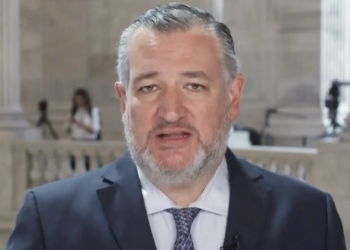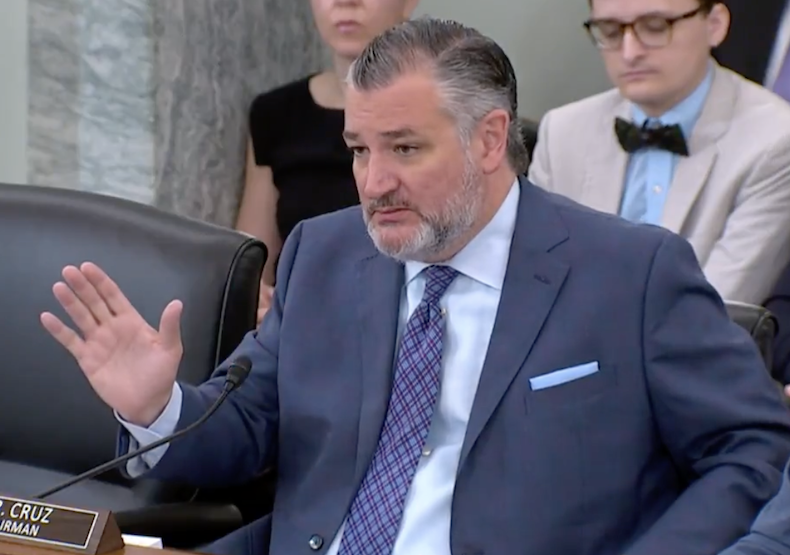
Texas – Sen. Ted Cruz said Democrats could eventually push policies requiring women to wear full-body burkas as he criticized New York Gov. Kathy Hochul over her decision to wear a hijab during a visit to a Muslim house of worship.
“We’re about 5 minutes away from Democrats mandating that all women wear full-body burkas….” Cruz wrote in a Sept. 2 post on X, responding to Hochul’s defense of her appearance at an Islamic cultural center.
The Texas Republican’s comment came after Hochul pushed back against criticism surrounding a photograph of her wearing a black headscarf during a recent visit to the Islamic Cultural Center of New York.
“I was a guest in a Muslim house of worship and showed respect for the people who welcomed me,” Hochul said. “That used to be standard in this country before you came along. I’ll never apologize for treating people of any faith with dignity, no matter how Islamophobic you and your enablers are.”
The dispute followed a visit by Hochul to the Islamic Cultural Center of New York, where she participated in a Friday prayer service, spoke to worshippers and toured the center’s school facilities. The governor wore a headscarf during the visit, a decision that quickly drew criticism from conservative commentators and political figures.
The controversy also drew attention because the visit came shortly before the 25th anniversary of the Sept. 11 terrorist attacks. Conservative critics questioned Hochul’s decision to wear the head covering, while supporters defended it as an act of respect toward the religious customs of the people she was visiting.
The New York Post reported that Hochul’s appearance prompted criticism from several conservatives, including Rep. Brandon Gill, Riley Gaines and commentator Ben Shapiro. The criticism focused largely on whether the governor’s decision was consistent with her previous positions on women’s rights and feminism.

Hochul has defended her decision, saying she follows appropriate dress customs when visiting religious communities. Her office has also pointed to previous occasions when she wore a head covering while visiting Muslim communities, including a 2022 visit to a mosque in Ronkonkoma and the 2025 funeral of slain NYPD Officer Didarul Islam.
The governor also responded directly to criticism that wearing a hijab conflicted with her identity as a feminist.
“I just love it when men lecture women on whether or not they are a feminist,” Hochul said in response to Nassau County Executive Bruce Blakeman, who had questioned the combination of Hochul’s feminist messaging and her decision to wear the head covering.
Hochul has maintained that her decision was about respecting the people and religious community that invited her rather than making a political statement.
Cruz, however, has previously criticized Hochul over similar circumstances. In 2025, he came under pressure from the Council on American-Islamic Relations after mocking Hochul for wearing a hijab at the funeral of Officer Islam. CAIR called on Cruz to apologize to the officer’s family and Hochul, saying she had worn the head covering to respect Islamic customs at the religious funeral.
The latest exchange has once again placed Cruz and Hochul on opposite sides of a debate involving religion, cultural customs and women’s rights.
President Donald Trump also entered the dispute after criticizing Hochul in a post on Truth Social. Trump called Hochul the “Worst Governor in the Country” and accused her of wearing the hijab in an effort to win support from Arab voters. He also criticized New York’s congestion-pricing policy and linked it to Hochul’s support among the city’s Muslim and Arab communities.
Hochul responded to Trump by defending her visit and saying she would not apologize for treating people of any faith with dignity.
The disagreement has since expanded beyond Hochul’s clothing and into a broader political argument over how public officials should interact with religious communities.
Supporters of the governor have argued that wearing appropriate clothing inside a house of worship is a common gesture of respect and does not represent an endorsement of every belief associated with the religion. Critics, meanwhile, have used the episode to challenge Democrats on their positions regarding Islam, women’s rights and religious customs.
Cruz’s latest comment added another layer to the dispute, framing the controversy as part of a much broader political fight over the direction of the Democratic Party.
With the 25th anniversary of the Sept. 11 attacks approaching, the debate over Hochul’s visit has continued to generate political reactions from both sides, turning what began as a religious and cultural gesture into another flashpoint in the ongoing national political divide.