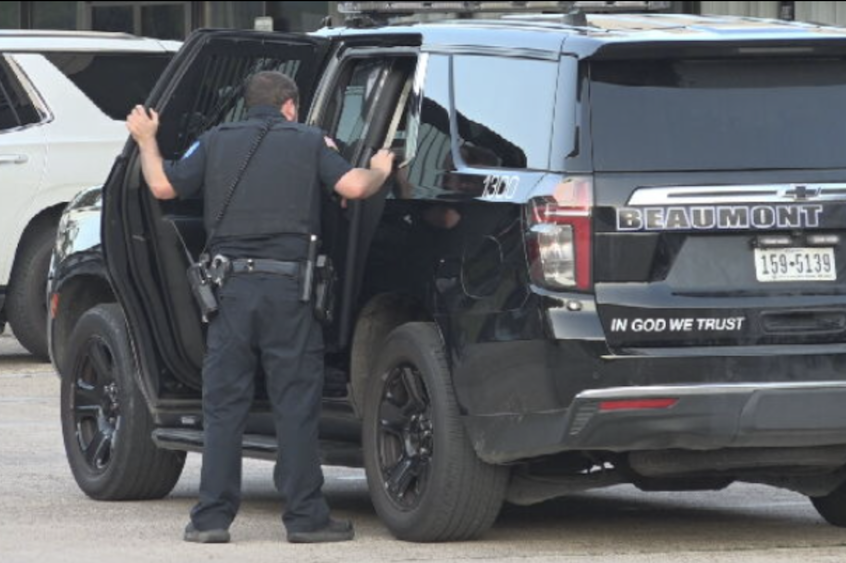
Beaumont, TX – Beaumont police arrested two 17-year-old suspects and two additional juveniles following an armed robbery at a CBD, vape, and smoke shop on Phelan Boulevard Monday evening, according to authorities.
The incident happened shortly before 7 p.m. on May 25 at High Times, located at 5925 Phelan Boulevard, when officers were dispatched to a reported aggravated robbery in progress.
Initial reports indicated that several suspects wearing hoodies and ski masks entered the business while armed with firearms. Multiple 911 callers later reported seeing the suspects leaving the area on foot and moving eastbound while displaying weapons, according to police information shared in similar aggravated robbery cases in the region .
Beaumont police officers quickly located the suspects a short time after the call. One of the individuals was found near a canal, and all four suspects were taken into custody without further incident.
No injuries were reported during the robbery or arrests.
The Beaumont Police Department’s Criminal Investigations Division (CID) and Identification Division (ID) responded to the scene to collect evidence and continue the investigation.
Authorities said evidence from the business and surrounding area is being processed as part of the ongoing case.
Law enforcement agencies in Southeast Texas have recently investigated multiple armed robberies involving vape and smoke shops, often involving masked suspects and firearms, with several cases resulting in quick arrests following coordinated police responses and surveillance review .
The investigation into the May 25 robbery remains active, and additional details have not yet been released.