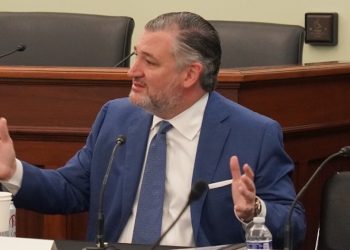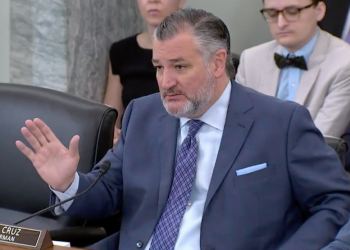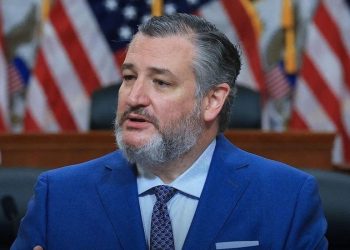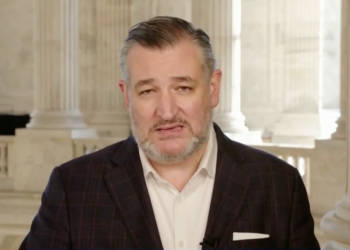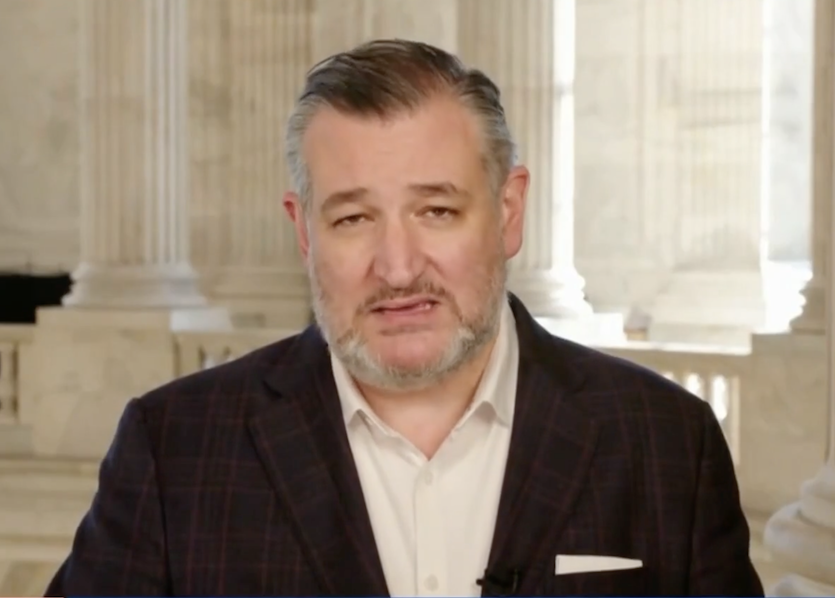
Texas – U.S. Sen. Ted Cruz praised a recent Supreme Court decision striking down federal limits on coordinated spending between political parties and their candidates, calling the ruling a “major victory for the First Amendment.”
In a statement shared on social media, Cruz said political parties exist to advance ideas, support candidates, and persuade voters, arguing that their speech remains constitutionally protected even when coordinated with the candidates they nominate.
“Political parties exist to advance ideas, support candidates, and persuade voters,” Cruz wrote. “Their speech does not lose constitutional protection because they coordinate with the candidates they nominate.”
The Supreme Court, in a 6–3 decision, ruled that federal limits on how much political parties can spend in coordination with their own candidates violate the First Amendment. The Court also overruled its 2001 precedent in Federal Election Commission v. Colorado Republican Federal Campaign Committee II, which had previously upheld coordinated spending restrictions.
According to reporting from SCOTUS-focused legal trackers and court documents, the case centered on provisions of the Federal Election Campaign Act (FECA) that restricted coordinated expenditures between political parties and candidates. The Court held that those restrictions placed unconstitutional limits on political speech.
The ruling was issued in the case National Republican Senatorial Committee et al. v. Federal Election Commission, which challenged the long-standing federal framework governing campaign finance coordination rules.
Cruz emphasized that political communication has always required financial resources, pointing to historical examples of political advocacy.
“The Federalist Papers cost money to print. Common Sense cost money to distribute. Modern political advocacy costs money to communicate,” Cruz said. “Congress cannot ration core political speech.”
He added that the Court “got it right,” aligning himself with the majority opinion that found the restrictions inconsistent with First Amendment protections.
The decision is expected to have significant implications for campaign finance rules heading into future election cycles, particularly regarding how political parties fund and coordinate messaging with their candidates.
Supporters of the ruling argue that it restores stronger protections for political speech and reduces government restrictions on party activity. Critics, however, have long argued that loosening coordinated spending limits could increase the influence of wealthy donors and political organizations in elections.
The ruling continues a broader trend in the Supreme Court’s campaign finance jurisprudence, which has expanded protections for political spending and narrowed the scope of federal regulation in this area over the past two decades.
As legal analysts review the decision, further challenges and regulatory adjustments from the Federal Election Commission are expected in response to the Court’s interpretation of the First Amendment.
The case marks another major shift in how federal election law governs the relationship between political parties and their candidates, with long-term implications for campaign strategy and fundraising.