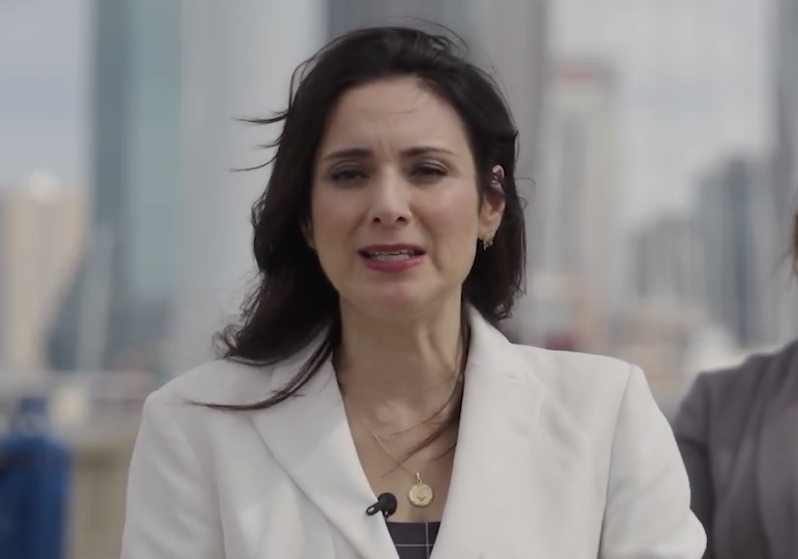
Texas – Texas Gov.-elect Gina Hinojosa is criticizing the state’s takeover of struggling school districts, arguing that the intervention is creating further instability and driving teachers out of classrooms, as she promises to begin returning control of public schools to local communities when she takes office in January.
“This resignation is more evidence that these takeovers further destabilize struggling schools and force teachers out of the classroom,” Hinojosa wrote in a post on X, responding to news that Beaumont Independent School District’s state-appointed superintendent, Sandi Massey, plans to resign after less than seven months in the position.
“Immediately upon taking office on January 19th, we will begin the systemic return of local control to Texas communities,” she added.
Hinojosa’s comments followed a November 16 report by the Houston Chronicle revealing that Massey, who previously served as a top administrator in Houston Independent School District (HISD), would step down at an upcoming school board meeting.
Massey was appointed by the Texas Education Agency (TEA) in April 2026, following the state’s decision to take over Beaumont ISD and replace its elected leadership with a state-appointed Board of Managers.
According to the Houston Chronicle, Massey was previously HISD’s chief of schools under state-appointed Superintendent Mike Miles. She was among several former Houston ISD administrators who moved into leadership positions in other Texas school districts undergoing state intervention, raising questions about whether the controversial management approach used in Houston would be replicated elsewhere.
Massey is scheduled to resign at the district’s November 19 school board meeting. Richard Yoes, Beaumont ISD’s chief of schools and academics and another former Houston ISD official, is expected to assume some of her responsibilities until an interim superintendent is appointed.
In a statement announcing her departure, Beaumont ISD thanked Massey for her leadership and contributions to the district, saying it appreciated her work on behalf of students.
“It has been an honor serving the children of this community and working alongside the amazing Beaumont ISD staff. I wish Beaumont ISD all the best moving forward,” Massey wrote to senior district staff, according to the Houston Chronicle. Hinojosa, however, offered a sharply different assessment of the leadership changes and the state’s intervention, accusing the state of creating additional problems for districts that were already struggling. In a separate statement released November 17, the governor-elect went further, accusing state officials of recklessly installing an administrator who had disrupted schools and created chaos.
“Just 7-months ago, the state took over Beaumont ISD and recklessly installed an official who sowed chaos and disrupted learning as she bounced from district to district,” Hinojosa said.
She also pledged to challenge the broader approach to school takeovers across Texas, framing the issue as part of her commitment to protecting public education and restoring authority to local communities.
“To Beaumont, I see you and I am fighting to save our public schools from these harmful takeovers all across Texas,” she said, adding that the Texas Constitution guarantees the right to a public education and promising to work toward delivering high-quality schools for students, parents and educators. The dispute comes amid broader criticism of the state’s intervention in Houston ISD, one of the most closely watched school takeovers in Texas. The Texas Education Agency took control of Houston ISD in 2023, replacing its elected school board with a state-appointed Board of Managers and installing Mike Miles as superintendent. The intervention followed years of academic accountability problems at one of the district’s campuses.
The takeover has remained controversial, particularly over changes to classroom instruction, school administration and teacher evaluations. Thousands of teachers have left the district under the appointed leadership, while educators and union representatives have raised concerns about limited classroom autonomy, working conditions and the level of support available to teachers.
The Houston Chronicle previously reported that Hinojosa’s election could have significant implications for the future of the Houston takeover. Her administration could influence the process through the appointment of a new education commissioner, who has authority over how state interventions are administered and what districts must accomplish before regaining local control. However, ending the takeovers will not necessarily be as simple as reversing the decisions. Texas law requires state intervention when a district has a campus receiving five consecutive failing accountability ratings, leaving the governor with limited direct authority to eliminate the process entirely.
The education commissioner has considerable discretion over how interventions are carried out, including decisions involving appointed leadership and the requirements districts must meet to return to local governance.
In Beaumont, the TEA announced its intervention in December 2025, citing persistent academic struggles at multiple campuses. The agency subsequently appointed a seven-member Board of Managers and selected Massey as superintendent in April 2026.
The state established several requirements for Beaumont to regain local control, including eliminating campuses with multiple consecutive unacceptable ratings, improving student performance in reading and mathematics, and demonstrating improved school board governance. Hinojosa’s promise to begin restoring local control on January 19 signals that education policy and the future of state intervention in Texas school districts will be among the early priorities of her incoming administration. Her comments also put the future of the state’s approach to struggling public schools back in the spotlight, with Beaumont’s latest leadership departure becoming another flashpoint in the debate over whether state-appointed officials or locally elected school boards are better positioned to address the challenges facing Texas public education.