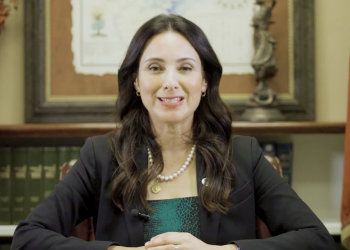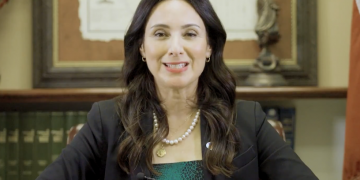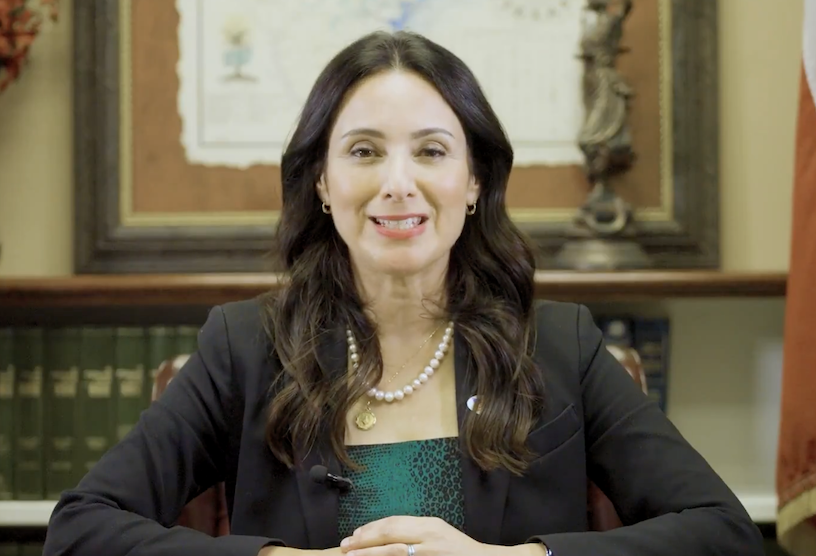
Texas – Texas Gov.-elect Gina Hinojosa is signaling a major shift in the state’s direction after defeating Republican Gov. Greg Abbott, pledging to move away from years of political division while outlining how she intends to approach immigration, public spending, education and other controversial issues. In an interview with The Washington Post published November 14, Hinojosa said she wants to prioritize moderation rather than continuing the political battles that have defined much of Abbott’s administration.
The incoming governor, who will become Texas’ first Latina governor, said she agrees with President Donald Trump that the southern border must remain secure, but sharply criticized the administration’s immigration enforcement operations inside American cities. “I agree with President Trump that our border needs to be secure and people should not be coming here to cross into the country,” Hinojosa said. However, she distinguished border security from interior immigration enforcement, describing the latter as “chaotic and dangerous” and arguing that people have been injured, killed and left afraid to interact with law enforcement.
Hinojosa also addressed the state’s cooperation with Immigration and Customs Enforcement, making clear that she would not overturn the Texas law requiring sheriffs and counties operating jails to comply with ICE.
“I will always follow the law. The law is what it is. It’s up to the legislature if that’s going to get changed,” she said.
Her comments come as Houston Mayor John Whitmire has already moved to limit local police cooperation with federal immigration authorities, a decision that has drawn criticism from Abbott.
Hinojosa told the Houston Chronicle she would not challenge local Democratic leaders who decide to restrict cooperation with ICE, while maintaining that she would follow existing state requirements. The incoming governor also promised to reconsider how billions of dollars have been spent under Abbott’s Operation Lone Star border security initiative, which was launched in 2021.
She said she would review the operation’s legality and examine whether state resources have been used effectively, arguing that public safety funding should focus on protecting communities rather than political objectives.
Education is another major area where Hinojosa is preparing to challenge Abbott’s policies.
Although she previously opposed Texas’ private school voucher program, she indicated that she intends to negotiate with Republican lawmakers rather than attempt to dismantle the program through executive action.
“It’s going to all be one big negotiation,” she said.
She also addressed state spending, promising to scrutinize programs and potentially veto funding that she believes does not provide meaningful benefits to Texans.
Hinojosa specifically questioned hundreds of millions of dollars allocated to pregnancy centers, saying she wants to determine whether the money is actually being used to provide health care services for women. The governor-elect also announced plans to declare a high-cost emergency when she takes office, freeze electricity rates, suspend the state’s 20-cent-per-gallon gas and diesel tax and push lawmakers to approve $1,500 payments to Texas households.
Another major proposal involves data centers. Hinojosa said she intends to declare a moratorium on new facilities that have not yet received state permits, citing concerns about their water and electricity consumption.
Despite her plans to reverse or reconsider several Republican-backed policies, Hinojosa acknowledged that she will face a divided legislature, with Republicans retaining control of the Texas Senate. She is scheduled to take office January 19, 2027, succeeding Abbott after his historic defeat ended more than three decades of Republican control of the Texas governor’s office. Hinojosa said her priority would be delivering results rather than continuing political fights. “The mandate we were given was to deliver for Texans,” she said.