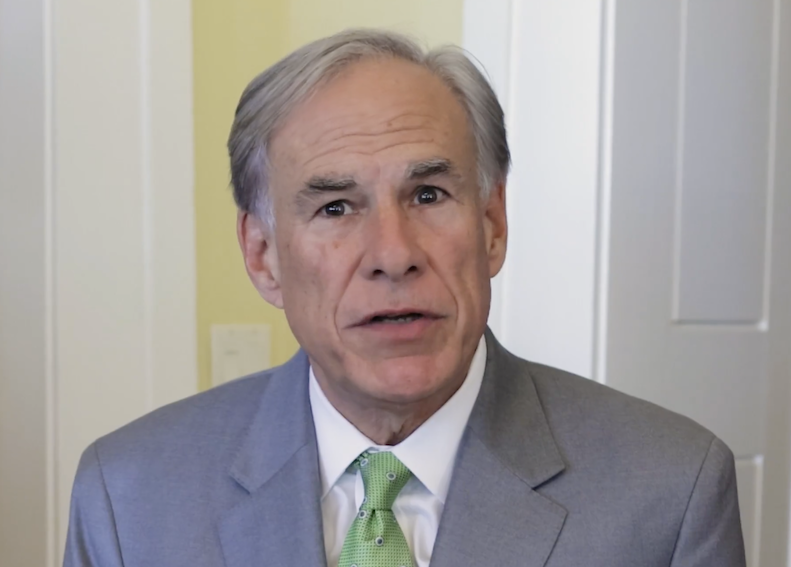
Texas Gov. Greg Abbott announced that the federal government has approved $7.5 billion to reimburse the state for border security costs incurred through Operation Lone Star, saying the payment represents a major reimbursement for Texas taxpayers who funded the state’s border efforts. Abbott announced the funding Sept. 18 after saying he spoke with U.S. Homeland Security Secretary Markwayne Mullin, who confirmed that Texas would receive the money through a federal border security reimbursement program.
“I spoke with Secretary Mullin yesterday, who confirmed that the Department of Homeland Security will be sending Texas $7.5 billion as part of the federal funding to reimburse Texas,” Abbott said. “Texas held the line when Washington would not. Texas taxpayers spent billions to stop illegal crossings, catch criminals, and seize deadly drugs. This reimbursement is a victory for those taxpayers. I thank President Trump and Secretary Mullin for this action.” The reimbursement was approved through the State Border Security Reinforcement Fund created under the One Big Beautiful Bill Act, the federal legislation signed into law in 2025 that established billions of dollars in funding for states seeking reimbursement for border security expenses.
State officials reported that the Department of Homeland Security and the Federal Emergency Management Agency approved the $7.5 billion grant Thursday, with Abbott announcing the award Friday. The Tribune reported that the payment comes more than a year after Congress authorized the reimbursement program.
Texas had been seeking reimbursement for billions of dollars spent on Abbott’s Operation Lone Star, the state’s border security initiative launched in 2021. The program has involved Texas National Guard soldiers and Department of Public Safety troopers, border barriers, fencing, concertina wire, technology and other enforcement efforts along the Texas-Mexico border.
According to The Texas Tribune, Texas spent more than $11 billion on border security through Operation Lone Star during the Biden administration. The state’s reimbursement application sought money for projects including wire barriers around Eagle Pass, personnel involved in more than 530,000 apprehensions of undocumented immigrants and nearly 54,000 criminal arrests, as well as the transportation of nearly 120,000 migrants to other states after they were processed and released by federal immigration authorities.
The federal reimbursement does not cover all of the money Texas has spent on border security.
Congress authorized $13.5 billion in total reimbursement funding for state and local governments. Of that amount, $10 billion was placed under the Department of Homeland Security, while another $3.5 billion was established through a Department of Justice program for immigration-related law enforcement expenses.
Texas’ $7.5 billion award represents three-quarters of the $10 billion DHS fund available to states.
The Texas Tribune reported in August that Abbott and Mullin had already negotiated the $7.5 billion amount, although the money had not yet been distributed. At the time, former Sen. John Cornyn said the delay had become frustrating after Congress had authorized the reimbursement more than a year earlier.
“It’s something that’s passed into law over a year ago,” Cornyn said at the time. “It’s a little maddening to feel like you’re pulling teeth, but that’s sort of what it feels like.”
The Texas Tribune reported that DHS opened applications for the $10 billion state grant program in June, nearly a year after the federal legislation creating the program was enacted. Texas submitted its application in June after Abbott publicly pressed the federal government to repay the state for its border security expenditures.
Texas Scorecard also reported that the state had spent more than $10 billion on Operation Lone Star and described the $7.5 billion award as reimbursement for border-security expenses incurred during the Biden administration. The outlet reported that Abbott’s office submitted the formal application to DHS in June.
The Houston Chronicle reported that Operation Lone Star has cost Texas more than $11 billion and that the $7.5 billion reimbursement will cover a substantial portion of the state’s expenses. The newspaper also reported that Texas has applied for additional money through the separate Department of Justice program.
Abbott’s office said Texas is seeking a portion of an additional $3 billion in DOJ funding to further reimburse the state for costs associated with border security. The governor’s office said the state deployed thousands of National Guard soldiers and DPS troopers, constructed border barriers and used technology as part of Operation Lone Star. Abbott has repeatedly argued that Texas taxpayers should not have been responsible for the full cost of securing the nation’s southern border.
The governor launched Operation Lone Star in March 2021 as the number of migrants encountered along the southern border reached historically high levels. The Texas Tribune previously reported that the state had allocated more than $11 billion to the operation and that Abbott had credited the initiative with helping reduce migrant crossings into Texas.
The Tribune also noted that immigration experts have disputed how much of the changes in migration patterns can be attributed specifically to Texas’ policies. The new federal payment comes as Texas prepares for another state legislative session in January. The Texas Tribune reported that the reimbursement can now be incorporated into the state’s financial planning because the federal award has been approved.
The money also marks a major development in the long-running effort by Abbott and Texas Republicans to obtain federal reimbursement for Operation Lone Star. Cornyn, Cruz and other members of the Texas congressional delegation had previously pushed federal agencies to distribute the money after Congress created the reimbursement program. With the $7.5 billion now approved, Texas is set to recover a significant portion of the billions it spent on border security during the Biden administration, while Abbott’s administration continues seeking additional federal reimbursement through the separate Justice Department fund.