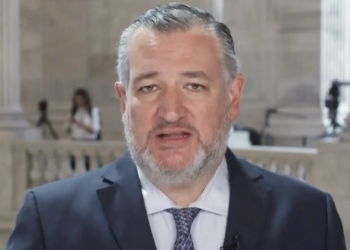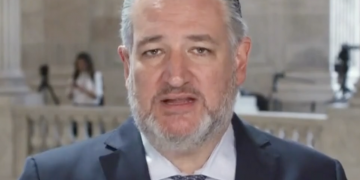
Texas – Sen. Ted Cruz emphasized concerns over federal spending priorities in a recent post on X (formerly Twitter), arguing that taxpayer dollars should not be used to support political or ideological activism through government-funded programs.
In his post, Cruz wrote: “Here’s a simple rule: Your tax dollars should not be used to fund left-wing political activism.” He went on to claim that for years, federal agencies directed money toward activist organizations that used public funds to promote ideological causes, oppose U.S. energy production policies, and undermine immigration enforcement agencies such as Immigration and Customs Enforcement (ICE).
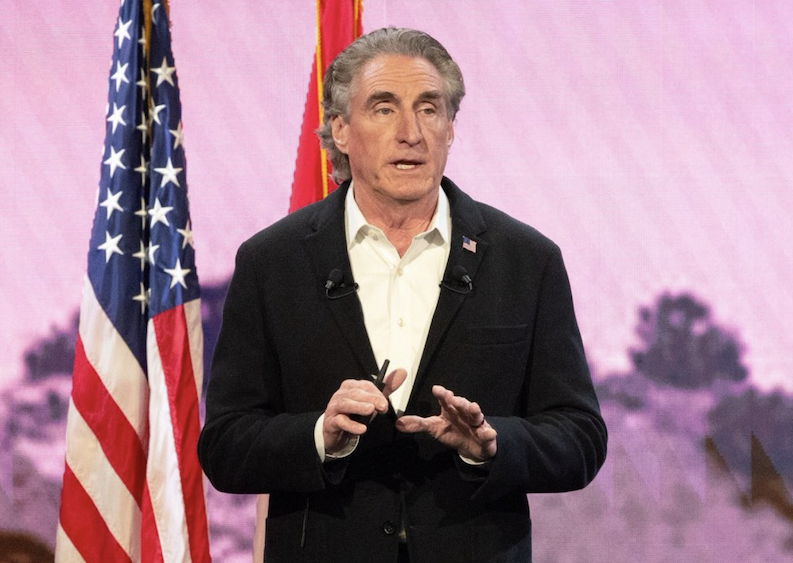
Cruz specifically praised Interior Secretary Doug Burgum, stating that Burgum was “right to shut it down.” His comments came in response to reporting shared by Fox News Politics indicating that the Department of the Interior had recently terminated dozens of partnerships and reduced federal funding following a broad internal review of agency agreements.
According to the Fox News report referenced in Cruz’s post, the Department of the Interior ended 43 partnerships and eliminated approximately $4 million in funding after reviewing programs that had been flagged for alignment with environmental justice initiatives, diversity equity and inclusion (DEI) programming, and services involving assistance for undocumented immigrants. The report characterized the terminated partnerships as being “in direct opposition” to the priorities of the Trump administration, which has emphasized stricter oversight of federal spending and a shift away from DEI-focused initiatives.
The funding cuts described in the report are part of a broader effort by federal agencies to reassess grant programs and cooperative agreements. Such reviews are typically conducted to ensure alignment with current executive branch policy priorities, compliance standards, and budgetary constraints. In this case, the review reportedly focused on partnerships that were considered by officials to be outside the agency’s core mission or inconsistent with updated administrative directives.
Supporters of the decision, including Cruz, argue that federal funds should be narrowly directed toward essential government functions rather than external organizations engaged in advocacy work. They contend that previous funding practices allowed taxpayer money to flow to groups engaged in political or ideological messaging, particularly around climate policy, immigration enforcement, and social equity programs.
Critics of such cuts, however, often argue that many nonprofit organizations partnering with federal agencies provide essential services, including environmental conservation efforts, community outreach, and support programs for underserved populations. They warn that broad funding reductions could weaken collaboration between government and civil society, potentially reducing the effectiveness of programs that rely on outside expertise and community engagement.
The Department of the Interior, a federal agency responsible for managing public lands, natural resources, and environmental conservation efforts across the United States, has not issued a detailed public breakdown of each terminated partnership beyond the reported figures cited in media coverage. However, internal reviews of grant programs are not uncommon following changes in administration or shifts in policy direction.
Cruz’s remarks reflect a broader political debate in Washington over the role of federal funding in supporting nonprofit organizations and advocacy groups. Republicans have increasingly pushed for restrictions on grants tied to DEI initiatives and climate activism, while Democrats generally defend such funding as part of broader efforts to address inequality, environmental protection, and community development.
The discussion also ties into ongoing disputes over immigration enforcement policy, with ICE frequently at the center of debates over federal funding priorities. Critics of activist-linked funding argue that some organizations use federal resources to oppose enforcement policies, while supporters maintain that advocacy groups play an important role in ensuring accountability and protecting civil rights.
As federal agencies continue reviewing grant programs and partnerships, further changes in funding allocations are expected, keeping the issue of taxpayer spending and ideological alignment at the center of political debate in Washington.