Texas – Texas Sen. Ted Cruz responded to speculation about Tucker Carlson potentially running for president in 2028, suggesting Carlson could form what he called a “unity ticket” with Michigan Democrat Abdul El-Sayed while criticizing both figures over their views on Iran and the Muslim Brotherhood.
Cruz made the remarks during an Aug. 7 appearance on the School of War podcast hosted by Aaron MacLean. The episode, published by The Free Press, was titled “Ted Cruz’s Plan to Bring Down Iran’s Regime—and Tucker Carlson” and focused on Iran, regime change, divisions within the American right and antisemitism.
The School of War account shared a clip from the interview while introducing Cruz’s comments as a response to rumors that Carlson could seek the presidency in 2028.
“That’s a great idea—and Tucker can form a unity ticket with Abdul El-Sayed,” Cruz said, according to the School of War’s post. He went on to criticize Carlson and El-Sayed over their positions toward the Muslim Brotherhood and Iran.
The comments came as Carlson’s name has continued to surface in discussions about the 2028 presidential race. Although Carlson has not announced a presidential campaign, speculation about a possible run has persisted as debates over the future direction of the Republican Party and the broader conservative movement continue, according to TFP.
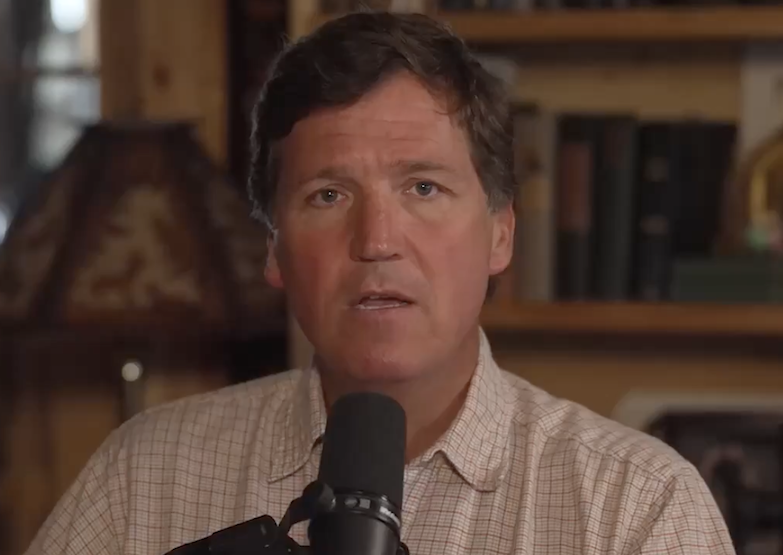
Cruz and Carlson have previously clashed publicly, particularly over foreign policy and the U.S. approach toward Iran. Their disagreements became especially prominent during a 2025 interview in which Carlson challenged Cruz over his support for Israel’s military actions against Iran and his views on regime change.
That earlier confrontation reflected a larger divide among conservatives over U.S. foreign policy. Cruz has taken a more hawkish position toward Iran and has argued for significant pressure on the Iranian regime, while Carlson has been critical of U.S. military involvement and questioned whether intervention serves American interests.
Iran was again a central subject of Cruz’s latest interview. The Free Press described the discussion as covering Cruz’s strategy for bringing down Iran’s regime, as well as the internal conflict within the American right. The publication also highlighted antisemitism as a major issue discussed during the conversation.
The Tucker Carlson portion of the discussion comes at a time when conservative politics remains divided over foreign policy. Carlson has become one of the most prominent voices questioning traditional Republican foreign-policy positions, particularly regarding military intervention and U.S. involvement in conflicts overseas.
Cruz, meanwhile, has continued advocating a much more aggressive approach toward Iran. His latest comments indicate that the disagreement with Carlson remains a significant part of his assessment of the former Fox News host’s political influence.
El-Sayed was also brought into the discussion by Cruz. The Michigan Democrat has recently attracted national attention following his political success in the state and has become another prominent voice in debates surrounding U.S. policy toward Israel and the Middle East.
By grouping Carlson and El-Sayed together, Cruz appeared to be drawing a contrast between his own foreign-policy views and those of politicians and commentators he believes are too sympathetic toward Iran or insufficiently supportive of confronting the Iranian government.
The School of War interview was hosted by MacLean, who is a national security analyst and a columnist for The Free Press. The episode runs approximately 31 minutes and was published Aug. 7. The publicly accessible page confirms the interview’s subjects, although the complete transcript is behind The Free Press‘s subscription access.
For now, there is no indication that Carlson has formally entered the 2028 presidential race. His potential candidacy remains speculation, although his continued influence among conservative voters has made him a recurring subject of discussion when Republicans consider possible successors to President Donald Trump.
Cruz’s latest comments add another chapter to the public disagreement between the two figures and highlight the continuing debate within the conservative movement over Iran, U.S. foreign policy and what direction the Republican Party should take heading into the next presidential cycle.