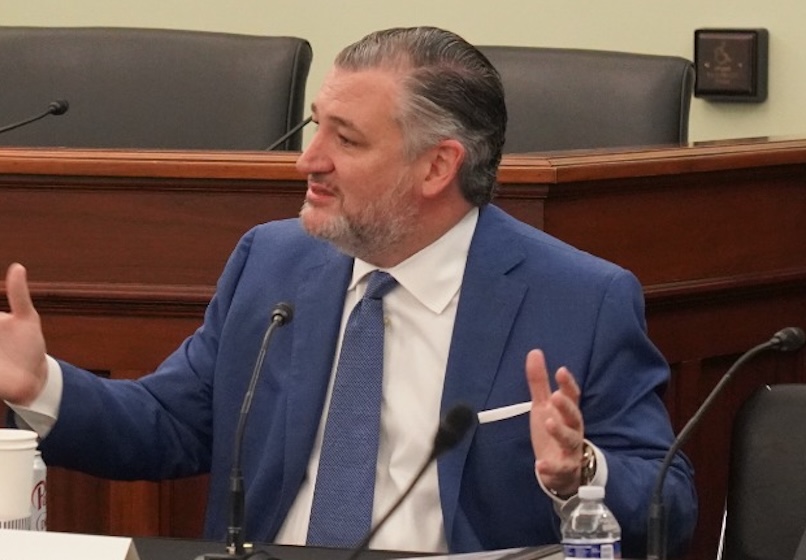
Texas – Texas Sen. Ted Cruz is taking aim at Democratic Kansas Senate candidate Adam Hamilton after resurfaced portions of a 2020 sermon drew attention to Hamilton’s comments about cattle, beef consumption and climate change.
“Woke Dem preacher—in Kansas—demands congregation repent for eating beef. God made cows. And Genesis 9:3 is explicit,” Cruz wrote , quoting the biblical passage that says, “Everything that lives and moves about will be food for you.”
Cruz’s comments came after Fox News reported that Hamilton, a United Methodist pastor and the Democratic nominee challenging Republican Sen. Roger Marshall in Kansas, had previously spoken to his congregation about the environmental impact of cattle and other sources of greenhouse-gas emissions.
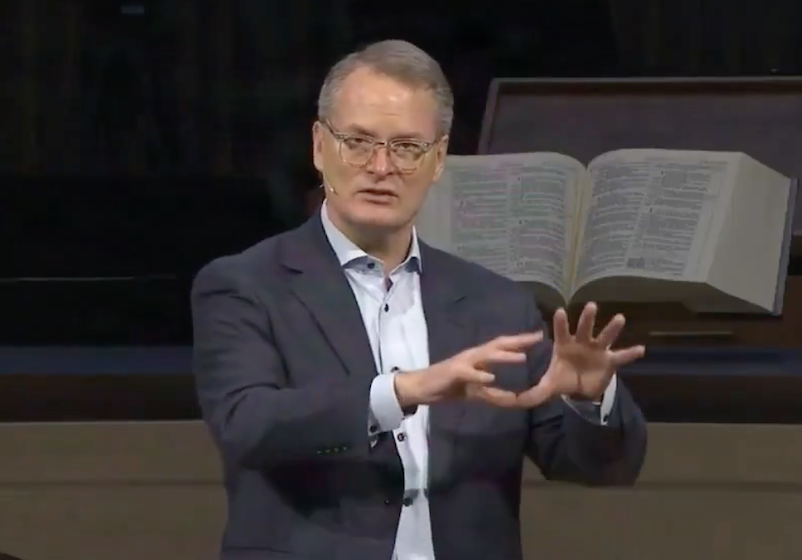
The controversy centers on a January 2020 sermon titled “What Would Jesus Say About Climate Change?” delivered by Hamilton at Church of the Resurrection in Leawood, Kansas. During the sermon, Hamilton discussed greenhouse gases, carbon footprints and what he described as the responsibility of Christians to be better stewards of the environment.
In remarks highlighted by Fox News, Hamilton said that some things people grow because they like to eat them, including cattle, produce more carbon dioxide than other crops or forms of food. He also discussed repentance as a change in how people think and behave, connecting the concept to environmental stewardship.
The comments have become a political issue in Hamilton’s Senate campaign, particularly because Kansas is one of the nation’s major cattle-producing states. Fox News reported that Kansas has more than 5.8 million cattle and ranks third nationally in beef production.
Cruz amplified the controversy by focusing on the religious language surrounding Hamilton’s climate message and by invoking Genesis 9:3, which he said directly addresses the consumption of animals.
The comments also drew attention from Republican allies. Steve Guest, a former communications adviser to Sen. Ted Cruz, posted that Hamilton had told his congregation to “repent” for raising cattle and eating beef while highlighting the size and economic importance of Kansas’ cattle industry.
However, other reporting has raised questions about how the resurfaced sermon is being characterized.
The Associated Press, in reporting carried by KSAT, said Republican political groups had attacked Hamilton over claims that he urged his congregation to repent for eating beef, but noted that the claim was based on clips from different portions of the 2020 sermon. One portion showed Hamilton calling Christians to repentance for failing to protect God’s creation, while another discussed changing diets as one possible way to reduce greenhouse-gas emissions.
That distinction is important because the sermon was broader than a message specifically telling church members that eating beef was sinful. Hamilton’s remarks addressed climate change, greenhouse-gas emissions and personal environmental choices, with cattle presented as one example of an activity that can contribute to emissions.
Hamilton has emerged as a high-profile Democratic challenger in Kansas, where he previously served as senior pastor of the Church of the Resurrection, one of the largest United Methodist congregations in the country. He has presented himself during the Senate campaign as a candidate focused on bringing people together rather than turning political disagreements into personal battles. The Washington Post reported earlier this month that Hamilton has emphasized that he would represent people regardless of their religious beliefs.
Marshall and Republican groups, meanwhile, have used Hamilton’s past comments on climate change and agriculture to argue that his views are out of step with Kansas’ agricultural economy. Hamilton’s campaign has pushed back by pointing to Marshall’s own past comments about methane emissions from cattle and accusing the Republican senator of attacking Hamilton over positions that Marshall has also expressed.
The dispute comes as the Kansas Senate race has attracted increased national attention. Recent reporting has described the contest as more competitive than Republicans traditionally expect in Kansas, with Hamilton challenging Marshall in a state that has long favored Republican Senate candidates.
For Cruz, the resurfaced sermon became another opportunity to criticize a Democratic Senate candidate over his approach to climate change and the role of religion in political debates. His Sept. 28 post focused specifically on Hamilton’s comments about beef and cattle, contrasting the Democrat’s environmental message with Cruz’s reading of the biblical passage concerning the consumption of animals.
The controversy has now placed a 2020 sermon at the center of a 2026 Senate campaign, with Republicans emphasizing Hamilton’s comments about cattle and greenhouse gases while Hamilton’s supporters argue that the sermon has been selectively presented and that his broader message concerned environmental stewardship and climate change.