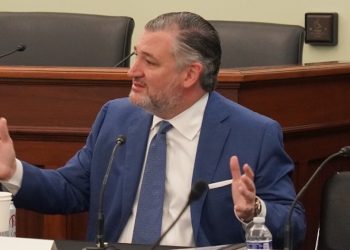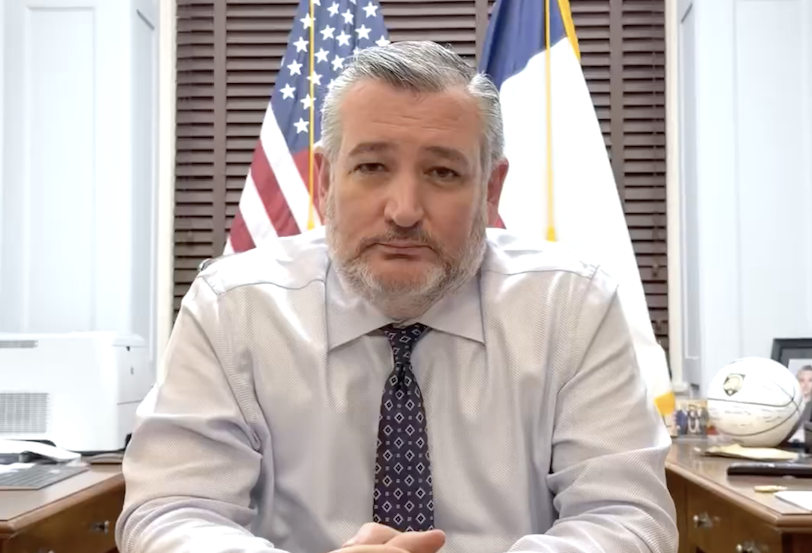
Texas – Texas Sen. Ted Cruz intensified his criticism of former White House COVID-19 adviser Dr. Anthony Fauci after Fauci repeatedly invoked the Fifth Amendment during a contentious Senate hearing, calling him “the most damaging bureaucrat in the history of America” and arguing he should face contempt of Congress, perjury charges, and jail time.
“He’s been the most damaging bureaucrat in the history of America,” Cruz said during a Fox News interview following the hearing. “He should be held in contempt. He should be prosecuted for perjury, and he should go to jail.”
Cruz’s comments came after Fauci appeared before the Senate Homeland Security and Governmental Affairs Committee on July 29 under subpoena as part of an ongoing investigation into the federal government’s handling of the COVID-19 pandemic and questions surrounding the origins of the coronavirus. The hearing was chaired by Sen. Rand Paul, who has spent years scrutinizing Fauci’s role in pandemic policy and federal funding of research involving coronaviruses, according to the officials.
At the beginning of the hearing, Fauci announced he would invoke his Fifth Amendment right against self-incrimination. Throughout the proceedings, he declined to answer more than 100 questions, citing concerns that his testimony could be used in future legal proceedings. The decision immediately drew criticism from several Republican senators, including Cruz, who argued that Americans deserved answers after years of debate over pandemic-era policies, Axios reported.
Cruz accused Fauci of misleading the public during the pandemic while privately expressing different views in personal diary entries that were recently released by Sen. Rand Paul. According to Cruz, the journals show Fauci celebrated the national attention he received during the pandemic while later denying responsibility for some of the policies he had supported.
“Americans buried parents alone. Children lost years of childhood. Families watched businesses they had built over a lifetime disappear,” Cruz wrote on X. “And while the country suffered, Anthony Fauci was writing in his diary about becoming ‘the most famous and talked about person in the country’ and marveling that his fame was ‘explosive and really unimaginable.’”
The diary entries, which span more than 1,000 pages, were released ahead of the hearing after Paul obtained them as part of the committee’s investigation. They include Fauci’s personal reflections on the pandemic, his interactions with President Donald Trump, and his growing public profile during the COVID-19 crisis. The entries have become a central focus of renewed political debate over the federal response to the pandemic, The Washington Post reported.
During his Fox News appearance, Cruz specifically referenced diary passages in which Fauci discussed encouraging officials in New York and California to close schools during the pandemic. Cruz argued that Fauci later publicly distanced himself from those recommendations, calling school closures “the single most destructive public policy step we’ve seen in decades.”
The Texas senator also criticized Fauci’s media presence during the pandemic, saying the former National Institute of Allergy and Infectious Diseases director sought publicity while imposing policies that affected millions of Americans.
“There was no camera he couldn’t find. No interview he couldn’t give. No American life he wouldn’t micromanage,” Cruz wrote. “He said one thing to the public, and would write the opposite in his diary.”
Cruz additionally revived a political attack aimed at Democratic Texas Senate candidate James Talarico, reposting a 2021 social media post in which Talarico thanked healthcare workers and showed a Dr. Fauci action figure. After Fauci invoked the Fifth Amendment, Cruz wrote: “James Talarico called Fauci a superhero. Today, Fauci took the Fifth 111 times. Apparently accountability was sold separately.”
Fauci defended his decision to invoke the Fifth Amendment in his opening statement, arguing that repeated public calls for his prosecution by some lawmakers created legitimate legal concerns. He also accused critics of attempting to use the hearing to obtain statements that could later be used against him in court.
The hearing marked the latest chapter in the long-running dispute between Fauci and Republican lawmakers over the federal pandemic response, COVID-19 origins, and research funding. While Republicans argued the hearing was necessary to determine accountability, Democrats criticized it as another politically motivated attempt to revisit pandemic controversies years after the public health emergency ended.