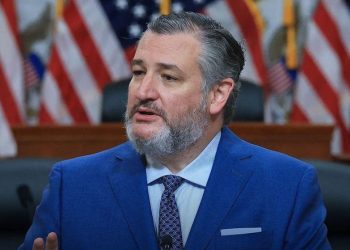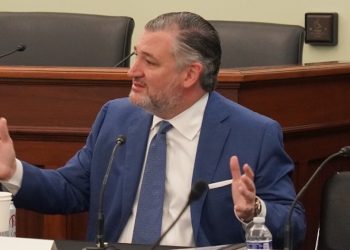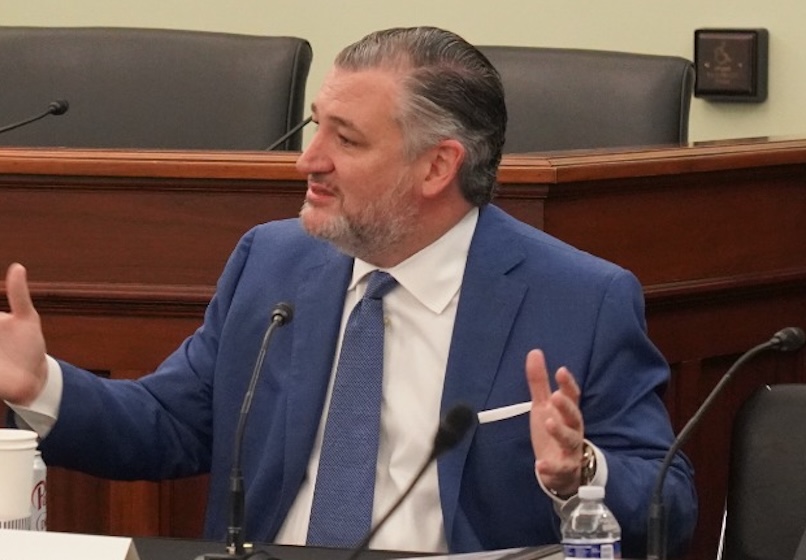
Texas – U.S. Sen. Ted Cruz has publicly lashed out at conservative commentator Grace Chong after she appeared to mock conservative commentator Dinesh D’Souza, who is the father-in-law of Republican Rep. Brandon Gill. Cruz responded directly to Chong in a post, calling her “a moron & a bigot” and defending D’Souza while accusing Chong of engaging in racial discrimination.
“You are a moron & a bigot. And @DineshDSouza is a patriot who loves America. Racism has no place in the GOP. Go be a Democrat, if you want to discriminate based on race,” Cruz wrote. The exchange followed a post from Chong in which she referenced what she described as the “Jeetification of Texas” and then pointed to Gill’s father-in-law. Chong wrote: “Jeetification of Texas. Brandon Gill’s father in law:”
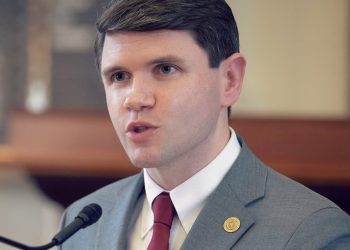
The brief exchange quickly drew attention because of the family and political connections involved. Gill is a Republican member of the U.S. House representing Texas’ 26th Congressional District, while D’Souza is a prominent conservative commentator and filmmaker. Gill is married to Danielle D’Souza Gill, making Dinesh D’Souza his father-in-law. The Texas Tribune previously reported that Gill worked with D’Souza on conservative political projects before entering Congress and has described his father-in-law as a political mentor.
Gill entered Congress after winning the Republican nomination for Texas’ 26th Congressional District in 2024. His campaign received support from prominent Republicans, including Cruz, and Gill has established himself as a vocal supporter of President Donald Trump and conservative causes.
The Cruz-Chong dispute comes amid increased attention surrounding Gill and his family following several recent political controversies involving the congressman and his wife.
A recent report by The Times of India also highlighted an online dispute involving Gill, political streamer Hasan Piker and Danielle D’Souza Gill. That dispute included comments about Danielle’s background and her family, prompting D’Souza to publicly defend his daughter.
Chong is associated with Steve Bannon’s political media operation and has been active in conservative political circles. Her post about Gill’s father-in-law appears to have prompted Cruz’s response, although the short exchange does not by itself establish the broader context behind Chong’s reference.
Cruz’s response focused specifically on race and D’Souza, accusing Chong of discrimination and arguing that such conduct has no place within the Republican Party.
The senator also told Chong to “Go be a Democrat,” turning the exchange from a dispute involving Gill’s family into a broader political confrontation over race and party identity.
D’Souza has long been a prominent and controversial figure within conservative politics. He has produced political films, written books and regularly commented on national political issues. The Texas Tribune reported that Gill worked with D’Souza on the film 2000 Mules and later described his father-in-law as someone from whom he learned about political communication.
D’Souza was also convicted in 2014 after pleading guilty to making illegal campaign contributions in other people’s names. President Trump pardoned him in 2018. The Texas Tribune has documented those events while covering Gill’s political background.
Gill’s relationship with D’Souza has been a recurring part of coverage of his political career. When Gill first emerged as a congressional candidate, The Texas Tribune noted his work with D’Souza and his connection to conservative media. The publication also reported that Cruz was among the Republicans who supported Gill during his 2024 congressional campaign.
The latest dispute, however, centers on Chong’s remarks and Cruz’s reaction rather than on any new legislative action by Gill.
As of the latest available search, major national news organizations had not published independent reports specifically focused on the Sept. 17–18 exchange between Chong and Cruz. The incident appears to have circulated primarily through social media, with existing news coverage providing background on Gill, D’Souza and their political relationships.
The dispute nevertheless illustrates how quickly social-media exchanges among conservative figures can become part of larger political arguments, particularly when they involve prominent elected officials and figures connected to the Trump-aligned Republican movement.
For now, the public exchange consists primarily of Chong’s post referencing D’Souza and Cruz’s direct response defending him and accusing Chong of bigotry and racial discrimination. Neither the short exchange nor the available reporting establishes additional context beyond those statements.